Modern uPVC windows have evolved far beyond the traditional white casement. Today’s options combine slim profiles, sophisticated colours, advanced thermal performance, and enhanced security — all with the low-maintenance benefits that made uPVC so popular in the first place. Whether you’re renovating a period property or updating a contemporary home, there’s never been a wider choice of styles and specifications to suit your property.
At Multitrades Windows & Doors, we manufacture, supply, and install high-quality uPVC windows across Watford, London, Hertfordshire, and surrounding areas. In this guide, we’ll walk you through the latest trends in uPVC window design, help you understand the key performance considerations, and explain how to choose the right windows for your home.
The New Generation of uPVC Windows
The uPVC windows being manufactured today bear little resemblance to the basic white frames of decades past. Advances in profile engineering, glazing technology, and finishing techniques mean homeowners no longer have to choose between appearance and performance.
Today’s windows offer: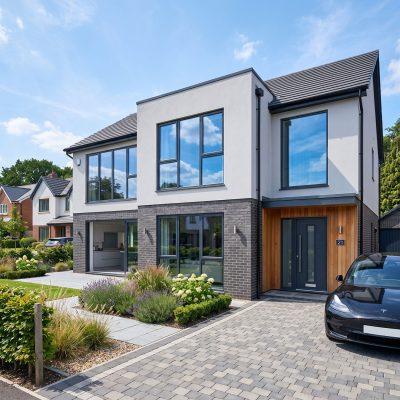
- Contemporary aesthetics with cleaner lines and slimmer sightlines
- Improved thermal insulation through multi-chambered profiles and high-performance glazing
- Better security with multi-point locking systems and reinforced frames
- Enhanced weather resistance thanks to refined seals and drainage systems
- More glazing options, including double and triple glazing with Low-E glass
- A wider choice of colours and finishes, from classic white to anthracite grey and wood-effect laminates
- Design flexibility that suits both traditional and modern properties
- Lower maintenance compared with timber, which requires regular painting and sealing
This evolution means you can now specify uPVC windows that look every bit as good as they perform. Whether you’re drawn to the clean minimalism of flush-fit frames or the heritage charm of uPVC sash windows, there’s a style to match your property’s architecture.
Modern uPVC Window Styles
Flush Fit uPVC Windows
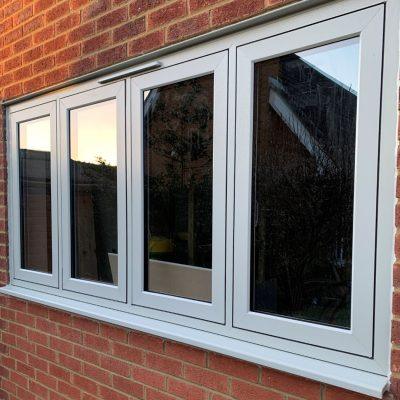 Flush-fit windows are one of the most significant design developments in recent years. Unlike standard casement windows, where the opening sash sits slightly proud of the frame, flush-fit windows have a sash that closes level with the outer frame, creating a smooth, continuous plane across the window’s face.
This design mimics the appearance of traditional pre-1950s timber joinery, making flush-fit windows an excellent choice for period properties. At the same time, their clean, minimalist styling suits modern homes perfectly. The reduced visual protrusion creates a sleeker, more refined look that complements stone, brick, and rendered façades alike.
Our Flush Fit Windows are available in a range of colours and finishes, and many configurations achieve an ‘A’ energy rating. If you’re looking for a window that combines traditional charm with contemporary performance, flush-fit is an increasingly popular choice.
Tilt & Turn uPVC Windows
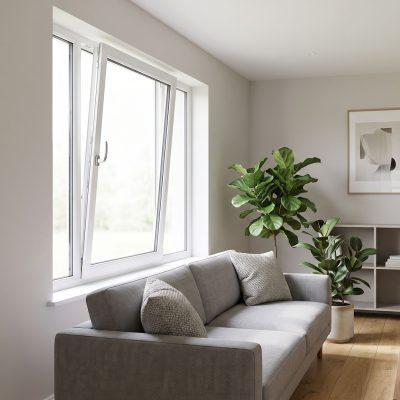 Tilt and turn windows offer two distinct opening functions from a single sash, providing exceptional versatility. Turning the handle to the first position tilts the top of the window inward, creating a small, controlled opening for secure ventilation. Turning the handle further opens the window fully inward from the side, like a door, providing maximum ventilation and easy access for cleaning.
This dual-action design makes Tilt & Turn Windows particularly well-suited to:
- Modern homes where flexible ventilation is valued
- Upper floors and apartments, where safe ventilation is important
- Properties where easy cleaning is a priority, since the external glass can be reached from inside
- Homes with young children, as the tilt position provides ventilation without a large opening
The inward-opening design also means tilt and turn windows are easy to operate and maintain. They can be specified with multi-point locking and are compatible with modern security hardware, making them a practical and secure option for a wide range of properties.
uPVC Sash Windows
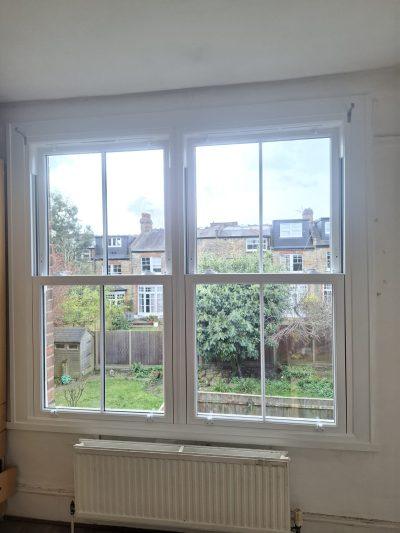 For homeowners in period properties, uPVC Sash Windows offer the best of both worlds: the traditional vertical sliding operation and elegant proportions of timber sash windows, combined with the practical benefits of uPVC.
Modern uPVC sash windows feature slim sightlines, deep bottom rails, and authentic detailing such as run-through sash horns and properly proportioned glazing bars. From the street, they closely resemble traditional timber sashes, helping to maintain the character of period properties in conservation areas and heritage settings.
Unlike timber, however, uPVC sash windows require no painting, sanding, or sealing. They resist rot, warping, and fading, and they incorporate modern weather seals and security features. With a choice of traditional colours and hardware options, they can be tailored to match the existing architectural character of your home.
Thermal Insulation & Energy Efficiency
Thermal performance is one of the most important areas where modern uPVC windows have advanced. Several features work together to reduce heat transfer and improve indoor comfort:
- Multi-chambered uPVC profiles create insulating air pockets within the frame itself
- Double or triple glazing provides two or three panes of glass with sealed air or gas-filled cavities between them
- Low-emissivity (Low-E) glass has a microscopically thin metallic coating that reflects heat back into the room
- Warm-edge spacer technology reduces thermal bridging around the edge of the glazing unit
- Weather seals around the frame and sash minimise draughts and water ingress
Together, these features help create a more comfortable indoor environment by reducing heat loss in winter and limiting unwanted heat gain in summer. A well-specified energy efficient uPVC window can make a noticeable difference to how comfortable your home feels, particularly in rooms that have previously suffered from draughts or cold spots.
It’s worth noting that actual performance depends on the specific window specification, the glazing chosen, the property itself, and the quality of installation. We’re happy to discuss the best options for your home’s particular requirements.
Modern uPVC Windows & Home Security
Security should be an important consideration when choosing replacement windows, alongside appearance and thermal efficiency. Modern uPVC windows can incorporate a range of features designed to enhance security: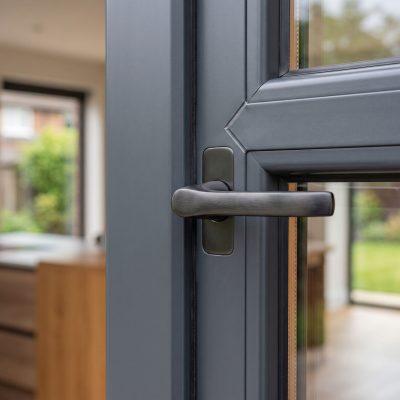
- Multi-point locking systems that secure the sash to the frame at several points
- High-security handles, including key-locking options
- Strong internal reinforcement within the frame and sash profiles
- Secure hinges and hardware designed to resist forced entry
- Toughened or laminated glass where appropriate, particularly for ground-floor and accessible windows
- Restrictor options that limit how far a window can be opened for ventilation
No window can be described as completely burglar-proof, but a well-specified secure uPVC window with PAS 24 certification and multi-point locking provides a significantly higher level of security than older window designs. We can advise on the most appropriate security specification for your property.
Colours, Finishes & Personalisation
White remains the most popular choice for uPVC windows, but it’s now just one of many options. Modern colour and finish technologies allow uPVC windows to be specified in a wide range of shades:
- Classic white — timeless, bright, and suitable for any property
- Grey and anthracite — a contemporary choice that works particularly well on modern homes
- Black — dramatic and elegant, often used on heritage-style properties
- Cream — a softer alternative to white that suits traditional settings
- Wood-effect finishes — including walnut, mahogany, and golden oak, which replicate the appearance of timber without the maintenance
Many window systems also allow different colours internally and externally, so you can have a light, bright interior while presenting a darker, more architectural exterior.
Colour can significantly influence the appearance of your property. Homeowners often coordinate window colours with front doors, garage doors, fascias and soffits, or exterior walls to create a cohesive look. It’s worth noting that colour and finish availability can vary depending on the specific window system, so it’s best to check what’s available for your chosen style.
Double Glazing vs Triple Glazing
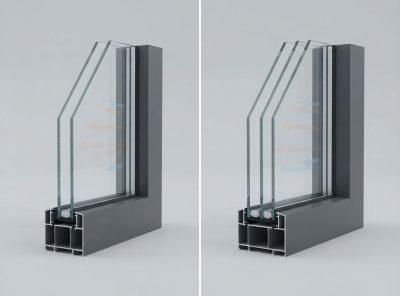 One of the most common questions we’re asked is whether to choose double or triple glazing. Here’s a straightforward comparison:
Double glazing uses two panes of glass separated by a sealed cavity. It offers good thermal performance, effective noise reduction, and represents excellent value. It is the standard specification for most replacement windows and is more than sufficient for many homes.
Triple glazing adds a third pane and an additional cavity. This provides superior thermal insulation and enhanced acoustic performance — often reducing noise by an additional 20–30% compared with double glazing. Triple-glazed windows are typically around 20% more expensive than their double-glazed equivalents.
Triple glazing is worth considering if:
- Your home is in a noisy area and you want maximum sound reduction
- You’re aiming for the highest possible energy efficiency
- Your property has large glazed areas where heat loss is a greater concern
- You’re working to a specific thermal standard, such as Passive House
That said, triple glazing isn’t automatically necessary for every property. For many homes, a well-specified double-glazed window will deliver excellent comfort and efficiency. The right choice depends on your priorities, your property, and your budget.
Modern Design Trends in uPVC Windows
Several trends are shaping the way homeowners approach window design today:
- Flush-fit profiles are increasingly popular for their clean, understated appearance
- Minimalist aesthetics favour slim sightlines and larger areas of glass
- Dark grey and anthracite finishes continue to grow in popularity, particularly on contemporary homes
- Black window frames are being used to create striking contrasts on both modern and traditional properties
- Heritage-style designs remain strong, with uPVC sash windows and flush casements replicating traditional joinery details
- Larger opening configurations are allowing more natural light into living spaces
- Mix-and-match approaches combine traditional styling with modern performance — for example, a heritage-style sash window that meets current thermal and security standards
More than ever, homeowners are viewing windows as part of the overall architectural design of their property, rather than simply functional openings. The right window style can enhance kerb appeal, improve interior comfort, and complement the character of a home.
Traditional Homes vs Contemporary Homes
Different property types lend themselves to different window styles: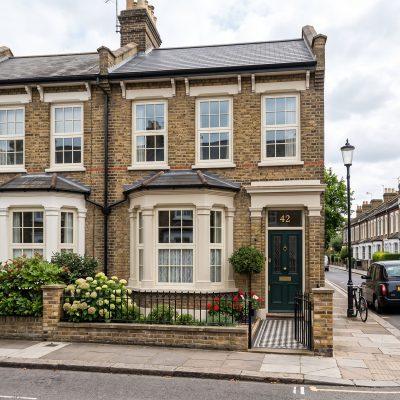
Period and traditional properties often suit:
- uPVC sash windows with vertical sliding operation
- Heritage-inspired flush-fit casements
- Traditional colours such as cream, white, or wood-effect finishes
- Appropriate glazing bars and period-style hardware
Modern and contemporary properties may be better served by:
- Flush-fit casement windows with clean, minimal lines
- Grey, anthracite, or black finishes
- Slim-profile designs that maximise glass area
- Tilt and turn configurations for flexible ventilation
There’s no single style that suits every property. The best approach is to consider your home’s architecture, your personal taste, and your practical requirements — and then choose a window that harmonises with all three.
Why Professional Installation Matters
Choosing the right window is only part of the process. Even a high-performance window can underperform if it is incorrectly measured or installed. Professional installation involves:
- Accurate measurements to ensure a correct fit
- Correct window specification for the opening and the property
- Proper preparation of the opening
- Skilled installation by experienced fitters
- Correct sealing and weatherproofing to prevent draughts and water ingress
- Appropriate finishing around the frame
- Compliance with applicable building requirements
A poorly installed window can suffer from draughts, leaks, and operational problems that undermine its performance. Working with an experienced installer gives you confidence that your windows will perform as intended for years to come.
Why Choose Multitrades Windows & Doors?
At Multitrades Windows & Doors, we are a family-run business based in Watford, Hertfordshire, specialising in the manufacture, supply, and installation of high-quality uPVC windows and doors.
We offer a comprehensive range of uPVC Windows, including Casement Windows, Tilt & Turn Windows, Flush Fit Windows, and uPVC Sash Windows. We also offer Double Glazing Windows and a range of aluminium products.
As a FENSA-certified company, every installation we perform is backed by a comprehensive warranty. We manage the entire process — from initial consultation and window selection through to bespoke manufacturing, supply, and professional installation. This end-to-end approach means you deal with one team throughout, ensuring consistency and quality at every stage.
We proudly serve homeowners and businesses across Watford, London, St Albans, Stanmore, Radlett, Barnet, Berkhamsted, Dunstable, Milton Keynes, and throughout Hertfordshire, Bedfordshire, and Buckinghamshire.
If you’re considering replacement windows, we can help you select the right style, glazing, colour, and specification for your property.
How to Choose the Right Modern uPVC Windows
Here’s a practical checklist to guide your decision:
- Choose the right window style — flush-fit, tilt and turn, sash, or casement
- Consider your property’s architecture — period properties often suit sash or heritage-style designs, while modern homes work well with flush-fit or tilt and turn
- Decide between double and triple glazing based on your priorities for thermal performance and noise reduction
- Review thermal performance — look for energy ratings and U-values that meet your requirements
- Check security features — multi-point locking, PAS 24 certification, and appropriate glazing
- Select a suitable colour and finish that complements your property’s exterior and interior
- Consider ventilation requirements — particularly for kitchens, bathrooms, and habitable rooms
- Think about maintenance — uPVC is low-maintenance, but hardware may occasionally need adjustment
- Check installation requirements — ensure the installer is qualified and the work will comply with building regulations
- Choose an experienced manufacturer and installer who can guide you through the process and deliver a quality result
Frequently Asked Questions
Yes. Modern uPVC windows benefit from significant advances in profile design, glazing technology, thermal insulation, and security. They typically offer better energy efficiency, improved weather resistance, and enhanced security compared with older uPVC windows. The choice of colours and finishes is also far wider today.
Flush-fit windows have a sash that closes level with the outer frame, creating a smooth, continuous surface. This mimics the appearance of traditional timber joinery and suits both period and contemporary properties. They are a popular alternative to standard casement windows for homeowners seeking a more refined look.
Yes. Tilt and turn windows are particularly well-suited to upper floors and apartments. The tilt function provides secure ventilation without a large opening, and the turn function allows full access for cleaning from inside. They are also a safer option for homes with young children.
Modern uPVC sash windows are designed to replicate the appearance of traditional timber sashes, with slim sightlines, deep bottom rails, and authentic detailing. They are a practical choice for period properties where maintaining architectural character is important, while offering the low-maintenance benefits of uPVC.
Triple glazing offers superior thermal and acoustic performance compared with double glazing. It’s worth considering for noisy locations, homes aiming for maximum energy efficiency, or properties with large glazed areas. However, it isn’t necessary for every property — a well-specified double-glazed window is more than adequate for many homes.
Modern uPVC windows can incorporate multi-point locking, high-security handles, reinforced frames, and laminated or toughened glass. PAS 24 certification provides independent assurance of enhanced security. No window is completely burglar-proof, but a well-specified modern uPVC window offers a high level of protection.
Modern uPVC windows are incredibly durable. When manufactured and installed to our high standards, you can expect them to last between 20 and 35 years. Because they are resistant to corrosion and moisture, they won’t warp or rot like timber.
Related Articles


Our Showroom
You are more than welcome to visit our showroom.
We are open MON – FRI 8.00am – 4.30pm
SAT – By Appointments Only
For outside working hours or weekends appointments, feel free to call us on 01923238322 or email at [email protected]
We’ll be happy to meet up and discuss your Glazing, Windows & Doors Project
Multitrades Windows & Doors