When replacing windows in a home or specifying them for a new build, the debate almost always comes down to two materials: uPVC (unplasticised Polyvinyl Chloride) and Aluminium. Both dominate the market, yet they represent fundamentally different philosophies regarding construction, longevity, and design.
There is no single “winner” in this comparison. Instead, the decision rests entirely on property type, budget, and aesthetic preference. This guide strips away marketing hype to deliver a data-driven, feature-by-feature breakdown of how these materials truly perform against each other.
1. Material Composition & Manufacturing
uPVC (Unplasticised Polyvinyl Chloride)
uPVC is a rigid plastic polymer that has been the default choice for residential windows since the 1980s. It is extruded into multi-chambered profiles.
- Structure: Hollow internal chambers (typically 3 to 7) reinforce the frame and trap air.
- Reinforcement: To prevent sagging, uPVC over 600mm wide requires internal galvanised steel reinforcement.
- Joining: Corners are heat-welded (fusion welded), creating a monolithic seal with no gaps.
Aluminium
Aluminium windows utilise extruded alloy (usually 6063 T6 grade), prized for its strength-to-weight ratio.
- Structure: Modern systems are “thermally broken”. This involves connecting the interior and exterior aluminium skins with a polyamide or epoxy-resin strut.
- Joining: Mechanically fastened or crimped corners, often reinforced with corner crimping for structural rigidity.
- Finish: Extruded as mill finish, then powder coated or anodised.
Key Takeaway: uPVC relies on volume and steel inserts for strength; aluminium relies on material density and sophisticated thermal breaks.
2. Cost Analysis (Supply & Install)
Cost is the primary decider for most homeowners. It is vital to compare “like for like”—i.e., double glazing vs double glazing, and standard colours vs standard colours.
| Aspect | uPVC | Aluminium |
|---|---|---|
| Average Cost (per m²) | £500 – £750 | £850 – £1,400+ |
| Typical 3-bed house | £3,500 – £5,500 | £6,500 – £10,000 |
| Colour Uplift | Low (usually included or small %) | High (significant premium for non-white) |
| Value for Money | Excellent (lowest entry cost) | Good (high entry cost, much longer lifespan) |
The Reality: uPVC is significantly cheaper. Aluminium commands a premium because the raw material is more expensive, fabrication is more complex, and the powder coating process is costlier than white uPVC extrusion. If you are on a strict budget or require white windows, uPVC is the economically logical choice. If you would like a premium option with much longer lifespan, than Aluminium windows are the best option for you.
3. Thermal Performance (U-Values)
Thermal efficiency is measured by the U-value (W/m²K)—the lower the number, the better the insulation.
uPVC Performance
- Standard: 1.4 – 1.8 W/m²K (Double glazing, standard profile).
- High Performance: 0.8 – 1.2 W/m²K (Triple glazing, multi-chamber profiles, low-e glass).
- Mechanism: Plastic is a natural insulator. The air trapped in the chambers stops conductive heat loss without needing complex engineering.
Aluminium Performance
- Old Systems (Non-thermal): 5.0+ W/m²K (Ice cold to touch, condensation heavy).
- Modern Thermally Broken: 1.2 – 1.6 W/m²K (Standard double glazing).
- High Performance: 0.8 – 1.4 W/m²K (Deep thermal pockets, triple glazing capable).
The Verdict: On paper, top-tier uPVC windows slightly outperforms top-tier aluminium regarding pure insulation. However, high-end aluminium systems (e.g., AluK, Schüco) now match Passive House requirements. For 99% of users, the thermal difference in modern products is negligible; the gap is bridged by the glass unit, not the frame.
4. Aesthetics & Sightlines
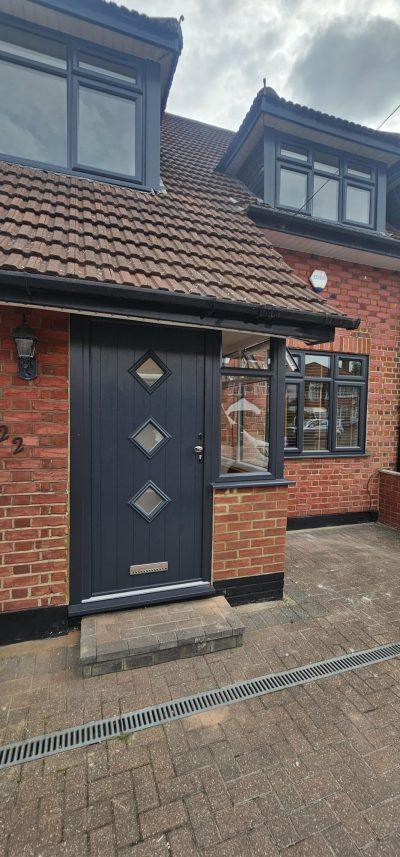 This is where aluminium wins decisively.
uPVC Aesthetics:
- Profile Depth: Bulky. Frames are usually 70mm to 80mm deep.
- Sightlines: Wide. The visible plastic border around the glass is thick.
- Style: Difficult to achieve a “flush fit” or contemporary “European” look without expensive foiling.
- Colour: White is crisp; woodgrain foils can look artificial and peel over time.
Aluminium Aesthetics:
- Profile Depth: Slim. Frames can be as narrow as 20mm visible face width.
- Sightlines: Ultra-slim, maximizing glass area.
- Style: Naturally suited to minimalist, industrial, and contemporary architecture.
- Colour: RAL (any colour) powder coating provides a smooth, consistent metallic finish.
The Verdict: If you have a period cottage, white uPVC with sculptured sashes looks acceptable. If you have a modern self-build, extension, or high-rise flat, aluminium is aesthetically superior.
5. Durability & Maintenance
Aluminium
- Lifespan: 40 – 60+ years.
- Rust: Aluminium oxidizes; it does not rust. The oxide layer protects the metal.
- Finish: Powder coating is baked on. It is UV stable and will not chalk, fade, or yellow significantly over decades.
- Warping: Zero thermal movement issues if properly installed.
uPVC
- Lifespan: 20 – 35 years (dependent on UV exposure).
- Degradation: UV rays cause the plastic to become brittle. By year 25, white uPVC may begin to chalk and micro-crack.
- Seals: Gaskets are often compression-fit into uPVC; they shrink over time, requiring replacement.
- Colour Fading: Dark colours are problematic. Black uPVC can reach surface temperatures of 70°C+, causing warping unless specially formulated.
The Verdict: Aluminium outlasts uPVC by a significant margin. It is the “fit and forget” material.
6. Structural Strength & Security
Frame Strength
- Aluminium: Naturally rigid. The extruded profile does not flex. It can support very large spans of glass (2m x 2m+) without reinforcement.
- uPVC: Flexible. It relies on the steel core to hold shape. Very large openings in uPVC require chunky steel reinforcing and risk sagging over time.
Security (Forced Entry)
- uPVC: Modern uPVC (Steel reinforced) fitted with multi-point locking systems is highly secure for residential burglary attempts. Weak point: the plastic between the lock and the keeper can spread under extreme hydraulic jacking.
- Aluminium: The material itself is resistant to spreading. The keepers and locks are screwed directly into solid metal, not plastic. Aluminium is inherently closer to commercial-grade security.
The Verdict: For standard residential use, both are secure. For high-risk ground floors or large sliding doors, aluminium is superior.
7. Environmental Impact (Sustainability)
As the construction industry moves toward Net Zero, material sustainability is scrutinised.
| Factor | uPVC | Aluminium |
|---|---|---|
| Raw Material | Oil-based polymer (finite resource). | Abundant element (bauxite). |
| Production Energy | Moderate energy consumption. | Very high (smelting requires huge electricity). |
| Recyclability | 100% recyclable, but often downcycled. | 100% infinitely recyclable. |
| Recycled Content | Low (<30% typical). | Very high (75%+ of all aluminium ever made is still in use). |
| End of Life | Chemically complex to repolymerise. | Melted down and recast with no quality loss. |
The Verdict: Aluminium has a higher carbon footprint in extraction but is a permanent material in the circular economy. uPVC has a lower initial footprint but is less sustainable over a 100-year timeline.
8. Physical Comparison: Heat, Cold & Condensation
Thermal Touch:
- uPVC: Feels warm to the touch even when it is freezing outside.
- Aluminium: Non-thermally broken aluminium is dangerously cold. Thermally broken aluminium feels warm on the inside face, though the metal remains cool.
Condensation:
- uPVC: Less prone to surface condensation because it is an insulator.
- Aluminium: If the thermal break fails, condensation runs heavily. High-quality thermal breaks prevent this.
9. Application Suitability (Which to choose where?)
Choose uPVC if:
- You are on a mid-range budget.
- The property is a standard 2/3/4-bedroom house.
- You require white windows.
- You do not plan to live in the house for more than 20 years.
- You need maximum insulation for minimal cost.
Choose Aluminium if:
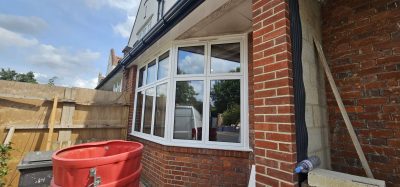
- You are designing a contemporary extension or new build.
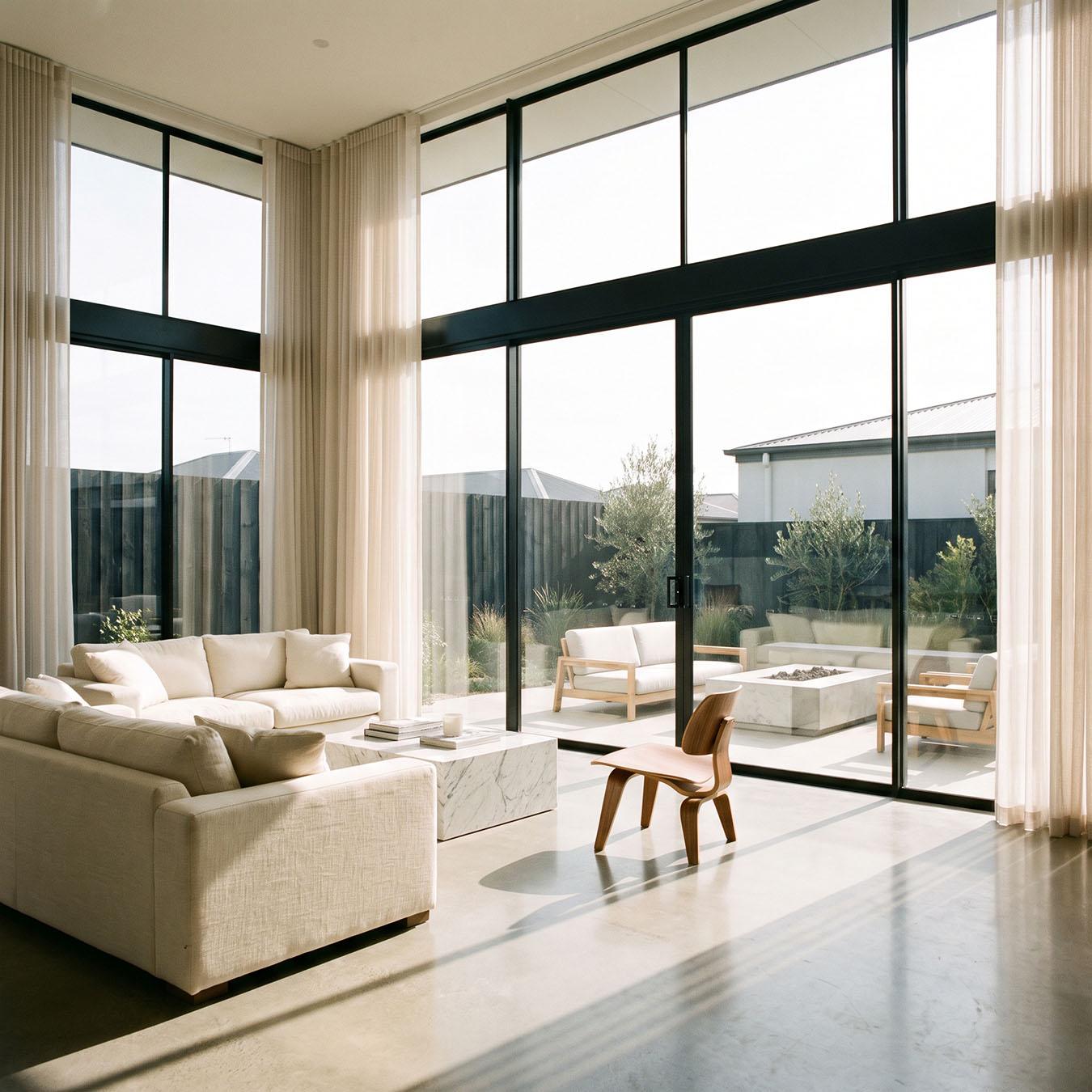
- You want slim sightlines and minimal frames.
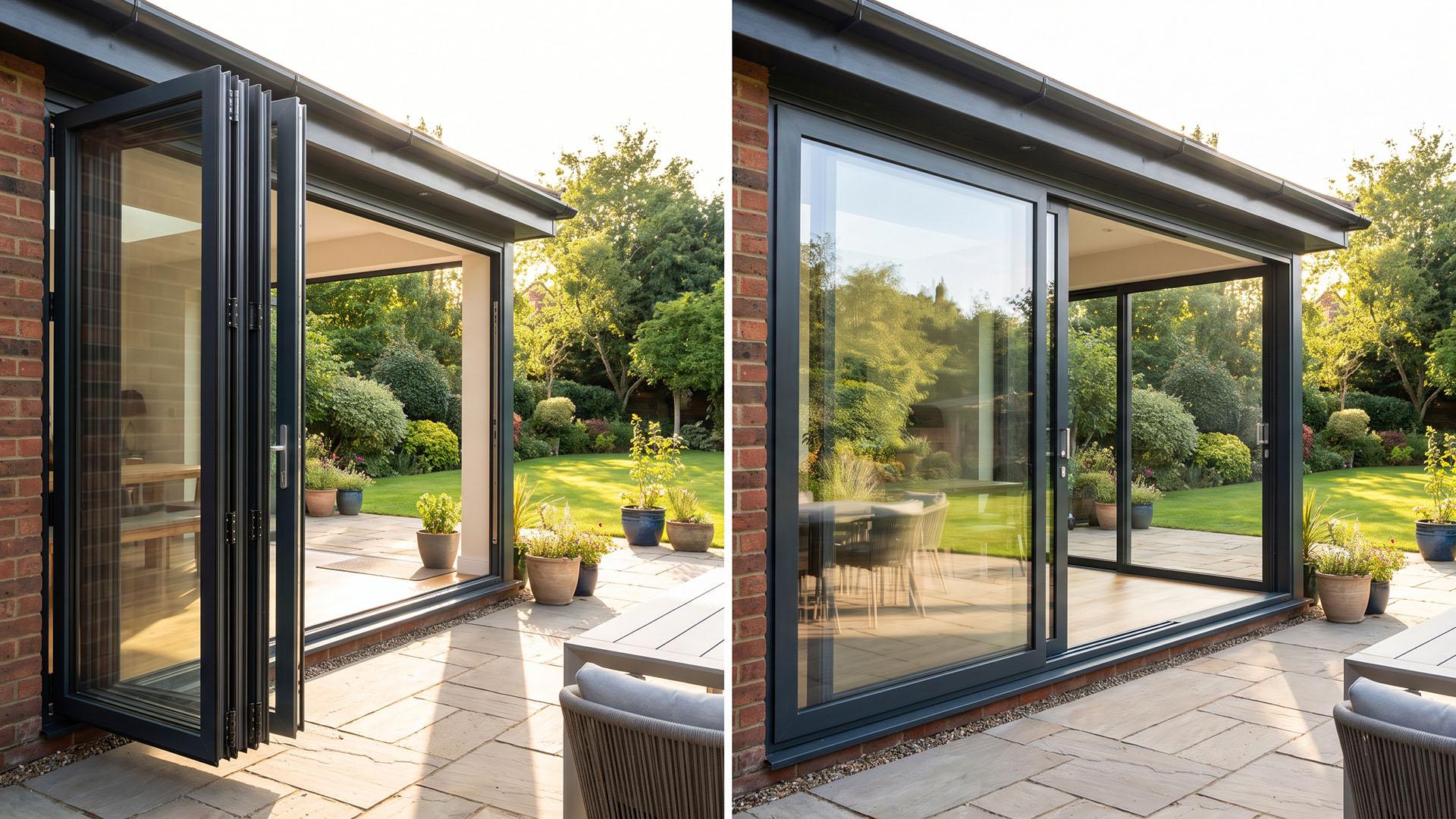
- The windows are large (bi-folds, floor-to-ceiling glazing).
- You want a specific RAL colour (Grey, Black, Green, etc.).
- You are looking for a 40+ year return on investment.
- The property is coastal (salt spray corrodes cheap metals; powder-coated aluminium handles it perfectly).
10. Myths Busted
Myth 1: “Aluminium is always cold.”
False. 30 years ago, yes. Today, thermally broken aluminium performs within 0.1-0.2 U-value of uPVC.
Myth 2: “uPVC windows rot.”
False. uPVC does not rot. Timber rots. uPVC degrades via UV brittleness, not biological rot.
Myth 3: “Aluminium is heavy.”
False. Profile for profile, aluminium is lighter than steel-reinforced uPVC. Aluminium allows for thinner walls due to tensile strength.
Myth 4: “uPVC is not secure.”
False. Modern steel-reinforced uPVC with hook locks is extremely difficult to breach without power tools.
11. Summary Verdict
The pragmatic choice: uPVC. It is cheap, warm, and good enough for the vast majority of British homes.
The aspirational choice: Aluminium. It is expensive, but it transforms the look of a property, lasts twice as long, and retains its aesthetic integrity indefinitely.
Future Proofing: If you are extending your property or building a forever home, invest in aluminium. The marginal thermal difference is offset by the lifespan and recyclability.
Immediate ROI: If you are selling a property in 5 years and need compliant, efficient windows now, install uPVC.
Final Word
Do not view the uPVC vs Aluminium debate as “Cheap vs Expensive.” View it as Temporary vs Permanent or Traditional vs Contemporary. Both materials serve their purpose perfectly; the trick is matching the material to the architecture of the building and the longevity goals of the owner.
If you are still unsure about which route to go, you should get in touch with a reputable manufacturer, supplier & installer of both types of doors. indeed Multitrades Windows & Doors will help you make the right decision. Contact us & book your consultation Today. our team of Experts will be more than happy to guide you through the entire process of Windows Installation.
Related Articles


Our Showroom
You are more than welcome to visit our showroom.
We are open MON – FRI 8.00am – 4.30pm
SAT – By Appointments Only
For outside working hours or weekends appointments, feel free to call us on 01923238322 or email at [email protected]
We’ll be happy to meet up and discuss your Glazing, Windows & Doors Project
Multitrades Windows & Doors